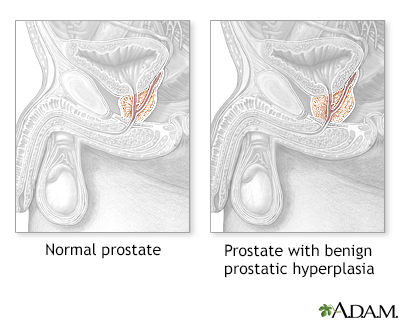
Hypergenesis DefinitionHyperplasia is increased cell production in a normal tissue or organ. Hyperplasia may be a sign of abnormal or precancerous changes. This is called pathologic hyperplasia. It can also be due to the increased growth of normal cells. This is called physiologic hyperplasia. An example of physiologic hyperplasia is an increase in the number of prostate cells most often seen in older men (benign prostatic hyperplasia). ReferencesAster JC, Abbas AK, Kumar V, Debnath J, Das A. Cell injury, cell death, and adaptations. In: Kumar V, Abbas AK, Aster JC, eds. Robbins, Cotran & Kumar Pathologic Basis of Disease. 11th ed. Philadelphia, PA: Elsevier; 2026:chap 2. | |
| |
Review Date: 7/3/2025 Reviewed By: Robert Hurd, MD, Professor of Endocrinology and Health Care Ethics, Xavier University, Cincinnati, OH. Review provided by VeriMed Healthcare Network. Also reviewed by David C. Dugdale, MD, Medical Director, Brenda Conaway, Editorial Director, and the A.D.A.M. Editorial team. The information provided herein should not be used during any medical emergency or for the diagnosis or treatment of any medical condition. A licensed medical professional should be consulted for diagnosis and treatment of any and all medical conditions. Links to other sites are provided for information only -- they do not constitute endorsements of those other sites. No warranty of any kind, either expressed or implied, is made as to the accuracy, reliability, timeliness, or correctness of any translations made by a third-party service of the information provided herein into any other language. © 1997- A.D.A.M., a business unit of Ebix, Inc. Any duplication or distribution of the information contained herein is strictly prohibited. | |
| |

 Hyperplasia