Health maintenance visit - men - ages 40 to 64; Physical exam - men - ages 40 to 64; Yearly exam - men - ages 40 to 64; Checkup - men - ages 40 to 64; Men's health - ages 40 to 64; Preventive care - men - ages 40 to 64 DefinitionYou should visit your health care provider regularly, even if you feel healthy. The purpose of these visits is to:
InformationEven if you feel fine, you should still see your provider for regular checkups. These visits can help you avoid problems in the future. For example, the only way to find out if you have high blood pressure is to have it checked regularly. High blood sugar and high cholesterol level also may not have any symptoms in the early stages. Simple blood tests can check for these conditions. There are specific times when you should see your provider or receive specific health screenings. The US Preventive Services Task Force (USPSTF) publishes a list of recommended screenings, and these are updated as needed. Below are screening guidelines for men ages 40 to 64. BLOOD PRESSURE SCREENING Have your blood pressure checked at least once every year. Watch for blood pressure screenings in your area. Ask your provider if you can stop in to have your blood pressure checked. You can also check your blood pressure using the automated machines at some local grocery stores and pharmacies. Ask your provider if you need your blood pressure checked more often if:
If the top number is 130 mm Hg or greater, but lower than 140 mm Hg, or the bottom number is 80 mm Hg or greater, but lower than 90 mm Hg, this is considered stage 1 hypertension. Readings above these are considered stage 2 hypertension. Schedule an appointment with your provider to learn how you can reduce your blood pressure. Record your blood pressure numbers and bring this information to share with your provider. 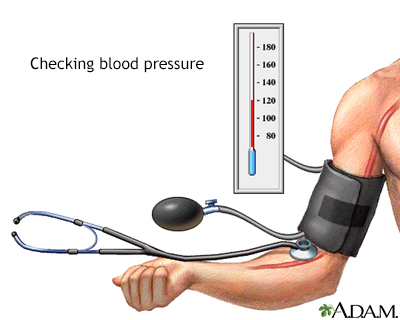 CHOLESTEROL SCREENING The American Heart Association recommends beginning cholesterol screening at age 20 for all men with no known risk factors for coronary heart disease and repeat every 4 to 6 years. Cholesterol screening should take place more often if:
COLORECTAL CANCER SCREENING If you are under age 45, talk to your provider about getting screened. You may need to be screened if you have a strong family history of colon cancer or polyps. Screening may also be considered if you have risk factors such as a history of inflammatory bowel disease or polyps. If you are age 45 to 75, you should be screened for colorectal cancer. There are several screening tests available:
You may need a colonoscopy more often if you have risk factors for colorectal cancer, such as:
DENTAL EXAM
PREDIABETES AND TYPE 2 DIABETES SCREENING You should be screened for prediabetes and type 2 diabetes starting at age 35 if you are overweight or have obesity. Screening should be repeated every 3 years if you still are overweight or have obesity. Screening may need to start earlier and be repeated more often if you have other risk factors for diabetes, such as:
EYE EXAM
IMMUNIZATIONS Commonly recommended vaccines include:
Ask your provider if you should receive other immunizations, especially if you have certain medical conditions, such as diabetes or are at increased risk for some diseases such as pneumonia. INFECTIOUS DISEASE SCREENING
Depending on your lifestyle and medical history, you may need to be screened for infections such as syphilis, chlamydia, and other infections. LUNG CANCER SCREENING You should have an annual screening for lung cancer with low-dose computed tomography (LDCT) if:
OSTEOPOROSIS SCREENING
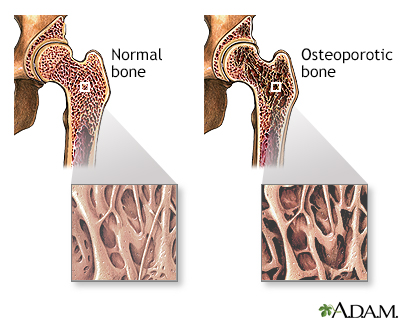 PHYSICAL EXAM Your blood pressure, height, weight, and body mass index (BMI) should be checked at every exam. During your exam, your provider may ask you about:
PROSTATE CANCER SCREENING If you're 55 through 69 years old, before having the test, talk to your provider about the pros and cons of having a prostate specific antigen (PSA) blood test. Ask about:
If you are younger than age 55, screening is not generally recommended. You should talk with your provider about if you have a higher risk for prostate cancer. Risk factors include:
If you choose to be tested, the PSA blood test is repeated over time (yearly or less often), though the best frequency is not known. Prostate physical examinations are no longer routinely done on men with no symptoms. 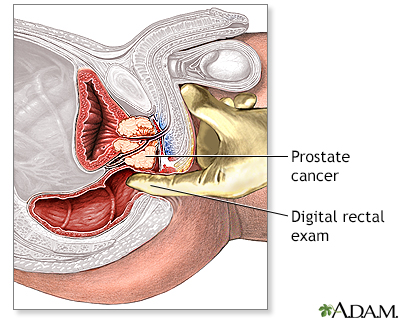 SKIN EXAM Your provider may check your skin for signs of skin cancer, especially if you're at high risk. You may be at high risk if you:
Professional organizations do not recommend for or against performing a skin self-exam. TESTICULAR EXAM The USPSTF recommends against performing testicular screening. Doing testicular exams has been shown to have little to no benefit. ReferencesAmerican Academy of Ophthalmology website. Clinical statement: Comprehensive adult medical eye examination PPP 2020. www.aao.org/education/preferred-practice-pattern/comprehensive-adult-medical-eye-evaluation-ppp. Updated November 2020. Accessed October 24, 2025. American Dental Association website. Your top 9 questions about going to the dentist - answered! www.mouthhealthy.org/en/dental-care-concerns/questions-about-going-to-the-dentist. Accessed October 24, 2025. American Diabetes Association Professional Practice Committee. 2. Diagnosis and Classification of Diabetes: Standards of Care in Diabetes-2025. Diabetes Care. 2025 Jan 1;48(1 Suppl 1):S27-S49. doi: 10.2337/dc25-S002. PMID: 39651986; PMCID: PMC11635041 pubmed.ncbi.nlm.nih.gov/39651986/. American Heart Association website. How to get your cholesterol tested. www.heart.org/en/health-topics/cholesterol/how-to-get-your-cholesterol-tested. Last reviewed February 19, 2024. Accessed November 1, 2025. Barton MB, Wolff TA. The preventive health visit. In: Goldman L, Cooney K, eds. Goldman-Cecil Medicine. 27th ed. Philadelphia, PA: Elsevier; 2024:chap 12. Bushnell C, Kernan WN, Sharrief AZ, et al. 2024 Guideline for the primary prevention of stroke: a guideline from the American Heart Association/American Stroke Association. Stroke. 2024;55(12):e344-e424. PMID: 39429201 pubmed.ncbi.nlm.nih.gov/39429201/. Centers for Disease Control and Prevention website. Vaccines & immunizations. Adult immunization schedule by age (Addendum updated June 27, 2024). Recommendations for ages 19 years or older, United States, 2024. www.cdc.gov/vaccines/hcp/imz-schedules/adult-age.html. Updated July 1, 2025. Accessed October 24, 2025. Grundy SM, Stone NJ, Bailey AL, et al. 2018 AHA/ACC/AACVPR/AAPA/ABC/ACPM/ADA/AGS/APhA/ASPC/NLA/PCNA Guideline on the management of blood cholesterol: a report of the American College of Cardiology/American Heart Association Task Force on Clinical Practice Guidelines [published correction appears in J Am Coll Cardiol. 201925;73(24):3237-3241]. J Am Coll Cardiol. 2019;73(24):e285-e350. PMID: 30423393 pubmed.ncbi.nlm.nih.gov/30423393/. Mora S, Libby P, Ridker PM. Primary prevention of cardiovascular disease. In: Libby P, Bonow RO, Mann DL, Tomaselli GF, Bhatt DL, Solomon SD, eds. Braunwald's Heart Disease: A Textbook of Cardiovascular Medicine. 12th ed. Philadelphia, PA: Elsevier; 2022:chap 25. US Preventive Services Task Force website. A and B recommendations. www.uspreventiveservicestaskforce.org/uspstf/recommendation-topics/uspstf-a-and-b-recommendations. Accessed October 24, 2025. US Preventive Services Task Force website. Final recommendation statement. Colorectal cancer: screening. www.uspreventiveservicestaskforce.org/uspstf/recommendation/colorectal-cancer-screening. Published May 18, 2021. Accessed October 24, 2025. US Preventive Services Task Force website. Final recommendation statement. Falls prevention in community-dwelling older adults: Interventions. www.uspreventiveservicestaskforce.org/uspstf/recommendation/falls-prevention-community-dwelling-older-adults-interventions. Published June 4, 2024. Accessed October 24, 2025. US Preventive Services Task Force website. Final recommendation statement. Hepatitis C virus infection in adolescents and adults: screening. www.uspreventiveservicestaskforce.org/uspstf/recommendation/hepatitis-c-screening. Published March 2, 2020. Accessed October 24, 2025. US Preventive Services Task Force website. Final recommendation statement. Human immunodeficiency virus (HIV) infection: screening. www.uspreventiveservicestaskforce.org/uspstf/recommendation/human-immunodeficiency-virus-hiv-infection-screening. Published June 11, 2019. Accessed October 24, 2025. US Preventive Services Task Force website. Final recommendation statement. Hypertension in adults: screening. www.uspreventiveservicestaskforce.org/uspstf/recommendation/hypertension-in-adults-screening. Published April 27, 2021. Accessed October 24, 2025. US Preventive Services Task Force website. Final recommendation statement. Lung cancer: screening. www.uspreventiveservicestaskforce.org/uspstf/recommendation/lung-cancer-screening. Updated March 9, 2021. Accessed October 24, 2025. US Preventive Services Task Force website. Final recommendation statement. Osteoporosis to prevent fracture: screening. www.uspreventiveservicestaskforce.org/uspstf/recommendation/osteoporosis-screening. Updated June 26, 2018. Accessed October 24, 2025. US Preventive Services Task Force website. Final recommendation statement. Prediabetes and type 2 diabetes: screening. www.uspreventiveservicestaskforce.org/uspstf/recommendation/screening-for-prediabetes-and-type-2-diabetes. Updated August 24, 2021. Accessed October 24, 2025. US Preventive Services Task Force website. Final recommendation statement. Prostate cancer: screening. www.uspreventiveservicestaskforce.org/uspstf/recommendation/prostate-cancer-screening. Updated May 8, 2018. Accessed October 24, 2025. US Preventive Services Task Force website. Final recommendation statement. Skin cancer: screening. www.uspreventiveservicestaskforce.org/uspstf/recommendation/skin-cancer-screening. Updated April 18, 2023. Accessed October 24, 2025. US Preventive Services Task Force website. Final recommendation statement. Testicular cancer: screening. www.uspreventiveservicestaskforce.org/uspstf/recommendation/testicular-cancer-screening. Published April 15, 2011. Accessed October 24, 2025. Whelton PK, Carey RM, Mancia G, Kreutz R, Bundy JD, Williams B. Harmonization of the American College of Cardiology/American Heart Association and European Society of Cardiology/European Society of Hypertension Blood Pressure/Hypertension Guidelines: Comparisons, Reflections, and Recommendations. Circulation. 2022;146:868–877. DOI: 10.1161/CIRCULATIONAHA.121.054602. PMID: 35950927 pubmed.ncbi.nlm.nih.gov/35950927/. | |
| |
Review Date: 6/24/2025 Reviewed By: Frank D. Brodkey, MD, FCCM, Associate Professor, Section of Pulmonary and Critical Care Medicine, University of Wisconsin School of Medicine and Public Health, Madison, WI. Also reviewed by David C. Dugdale, MD, Medical Director, Brenda Conaway, Editorial Director, and the A.D.A.M. Editorial team. The information provided herein should not be used during any medical emergency or for the diagnosis or treatment of any medical condition. A licensed medical professional should be consulted for diagnosis and treatment of any and all medical conditions. Links to other sites are provided for information only -- they do not constitute endorsements of those other sites. No warranty of any kind, either expressed or implied, is made as to the accuracy, reliability, timeliness, or correctness of any translations made by a third-party service of the information provided herein into any other language. © 1997- A.D.A.M., a business unit of Ebix, Inc. Any duplication or distribution of the information contained herein is strictly prohibited. | |
| |

 Prostate cancer
 Osteoporosis
 Effects of age on ...
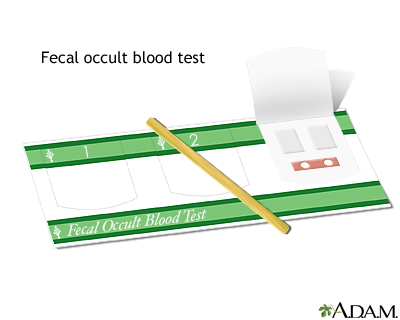 Fecal occult blood...